The seven stages, in order
This is one bathroom, photographed at every stage from the same spot. The times are typical ranges for each stage; your contractor’s schedule is the one that counts.
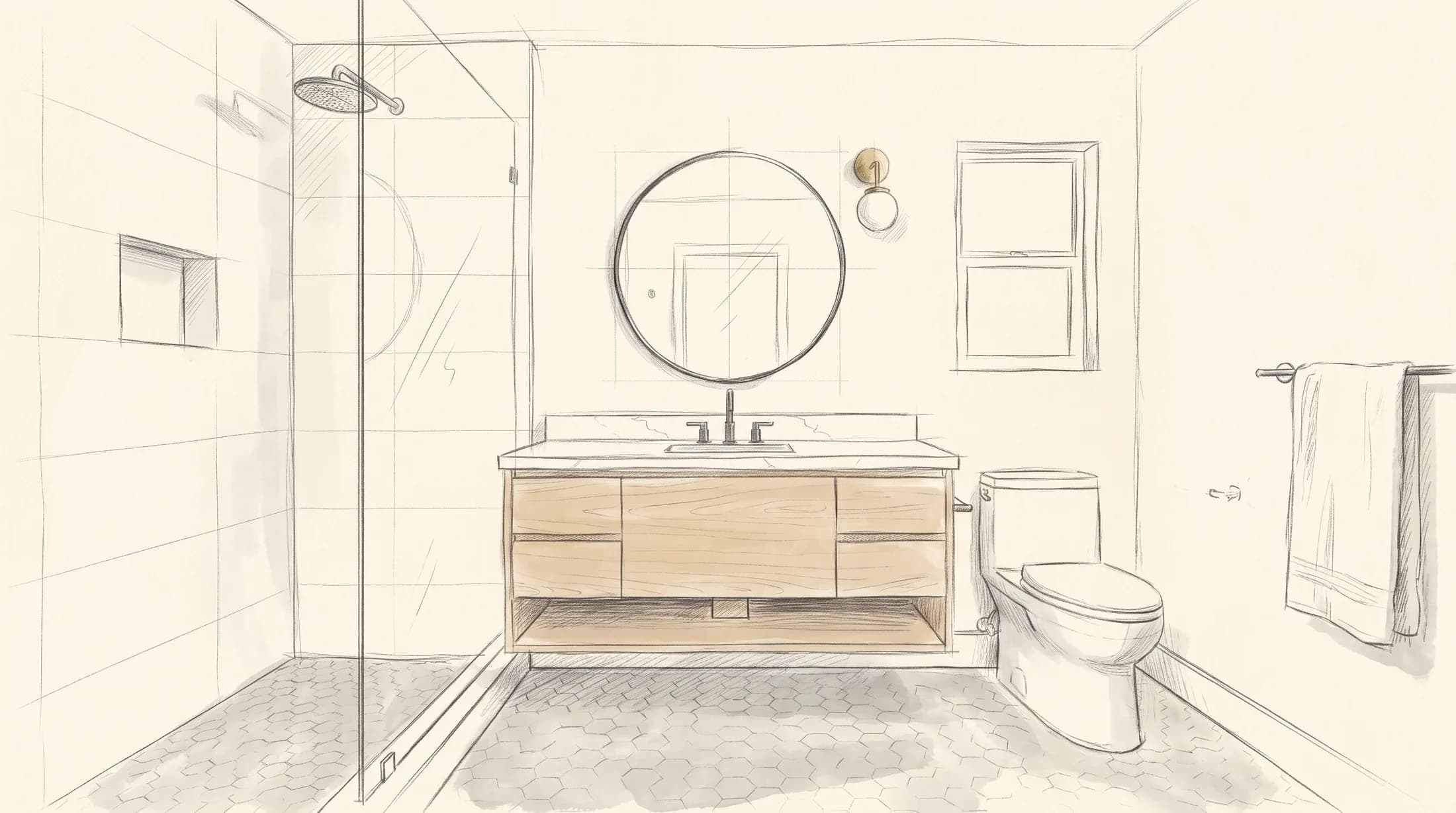
Stage 1 of 7
Design, ordering and permits
5 to 9 weeks
Layout, tile, vanity, fixtures and glass get chosen, quotes come in and the permit goes in. Order the vanity, tile and fixtures now: anything still on order when the walls open becomes the thing everyone waits for.
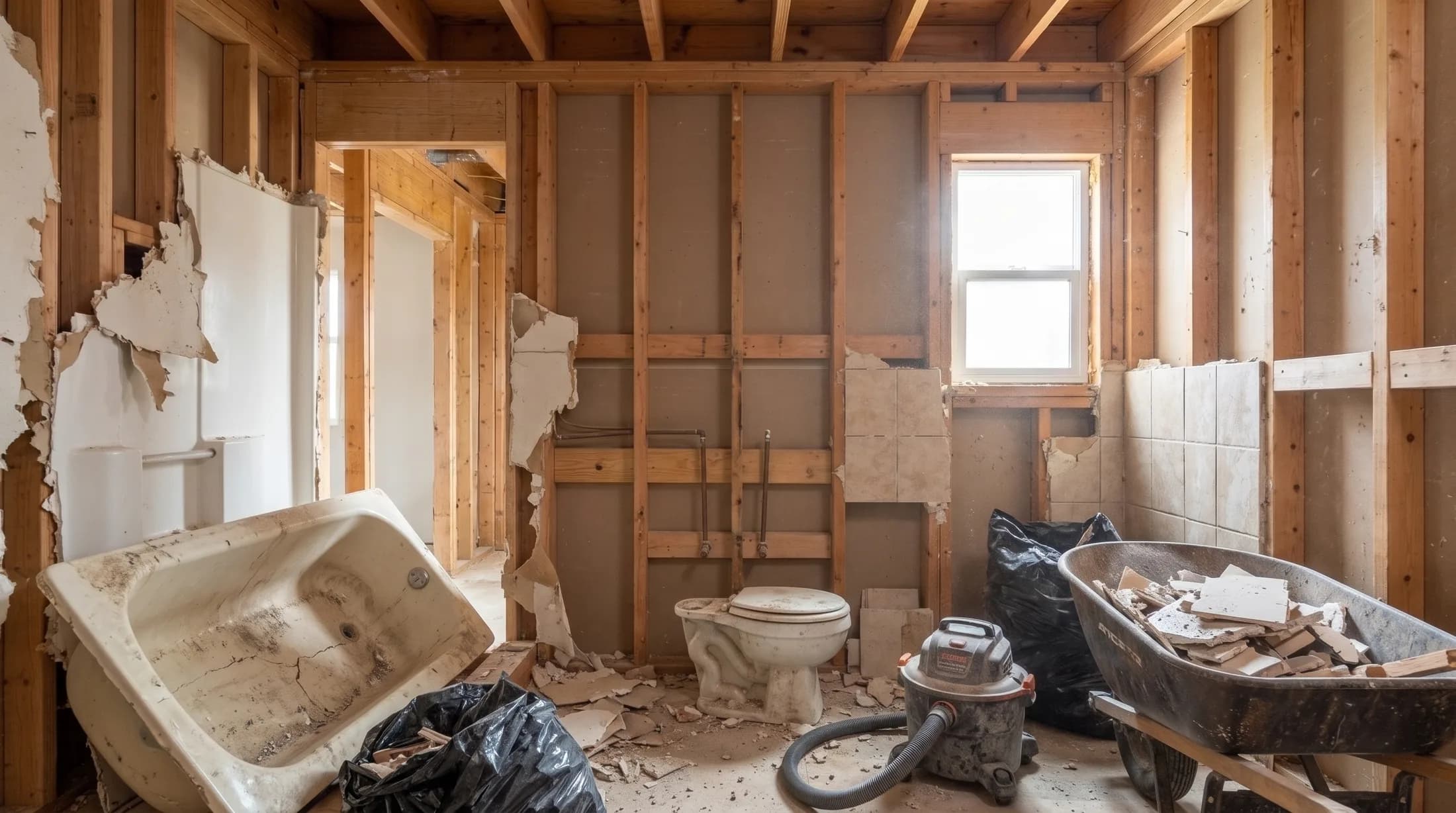
Stage 2 of 7
Demolition
1 to 2 days
Tile, tub or shower, vanity and toilet come out, often down to the studs. Water damage under an old tub or behind tile is common, and fixing rot or a soft subfloor adds days.
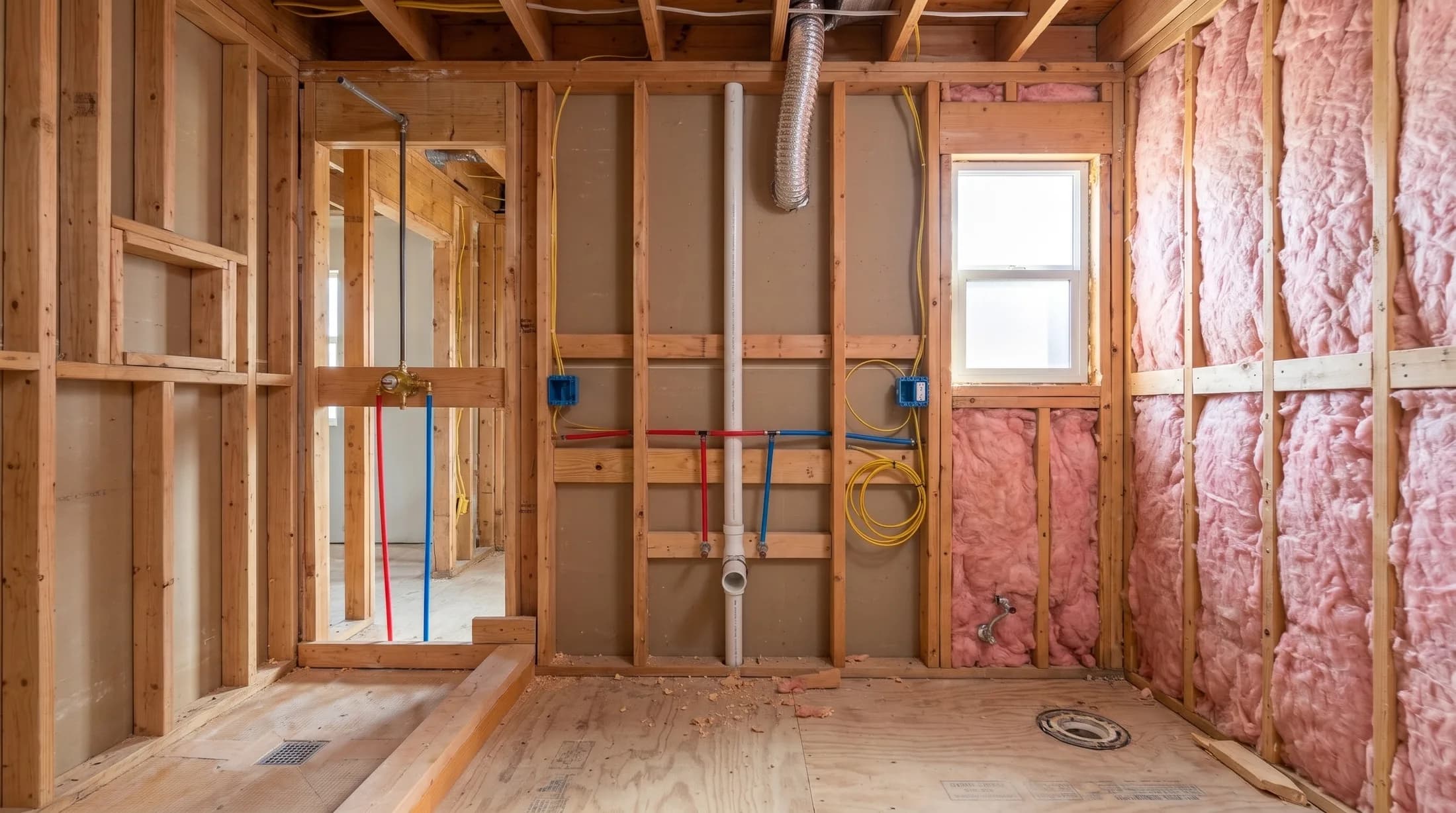
Stage 3 of 7
Plumbing and electrical rough-in
2 to 5 days, then inspection
The plumber sets the new drain, shower valve and supply lines, the electrician runs the fan, lights and outlets. Moving a drain is the slow part. An inspector signs it off before the walls close.
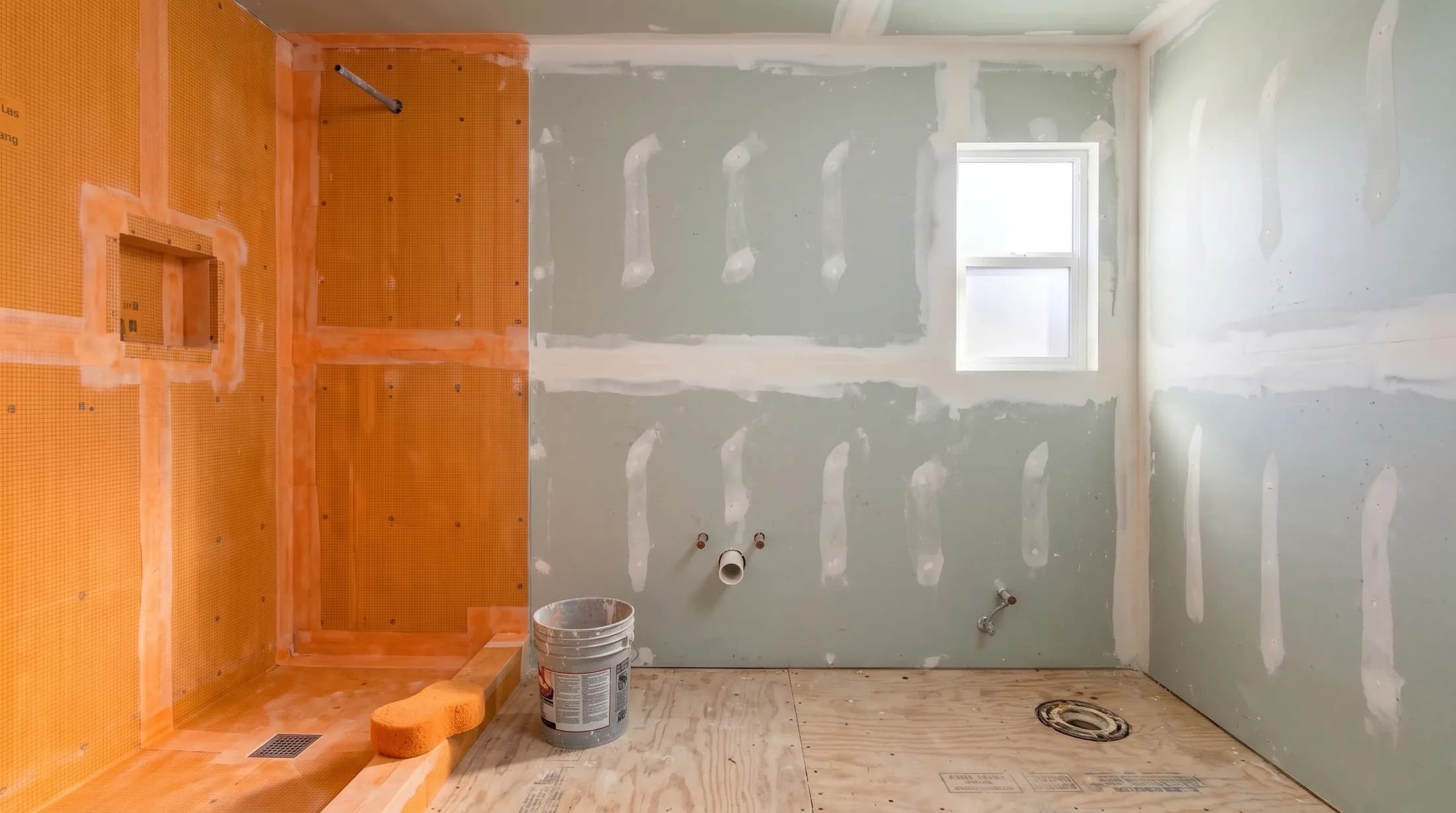
Stage 4 of 7
Walls and waterproofing
2 to 3 days, plus cure time
Board goes up, then the shower gets its waterproof membrane and the floor gets prepped. Membranes need to cure before tile goes on, and this is the stage that decides whether the shower leaks in ten years, so it is worth the wait.
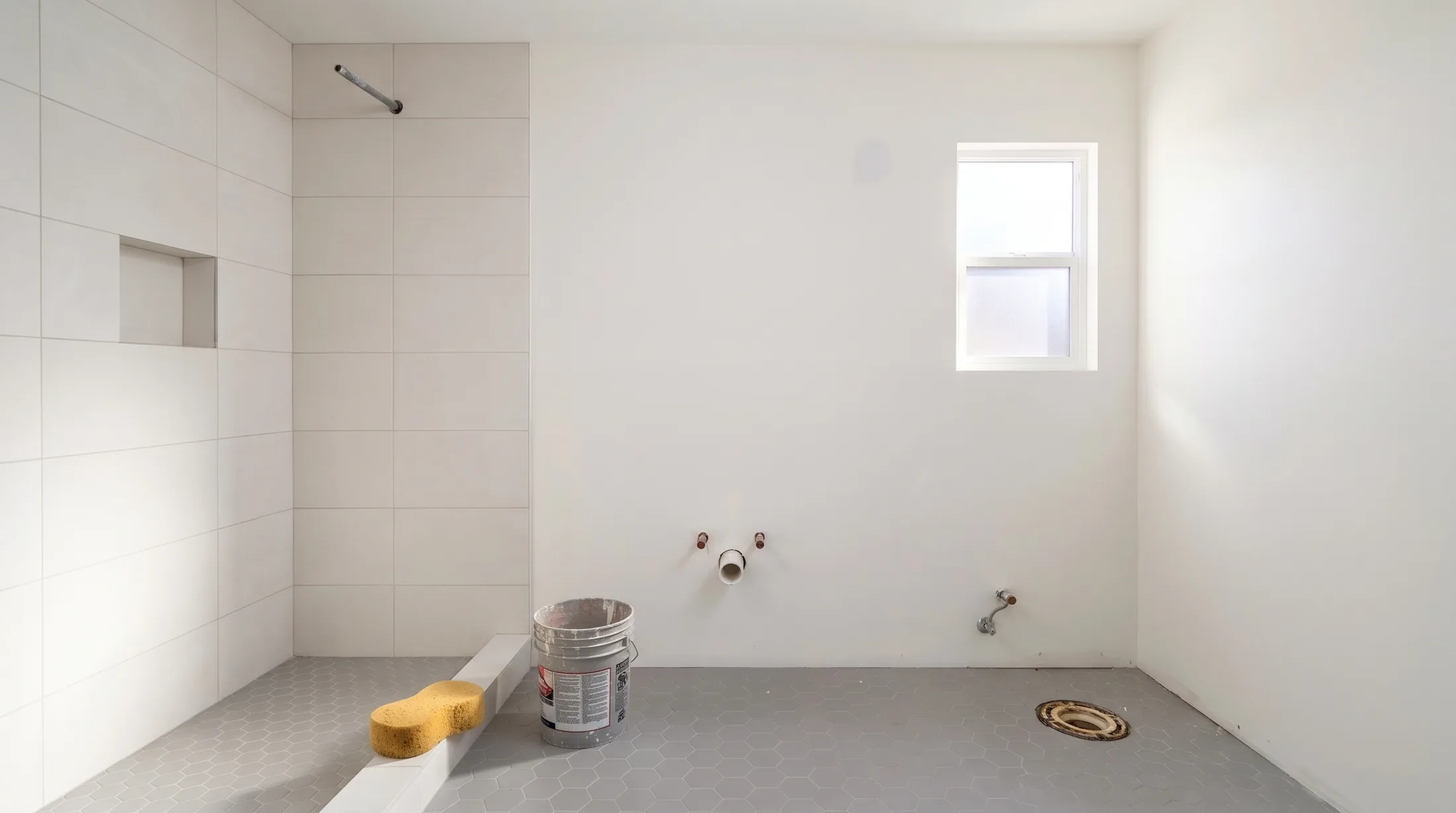
Stage 5 of 7
Tile and grout
3 to 5 days
Usually the longest hands-on stage. Tile is set, left to cure, then grouted the next day. Large tiles, niches and a curbless shower floor take longer than a simple wall.
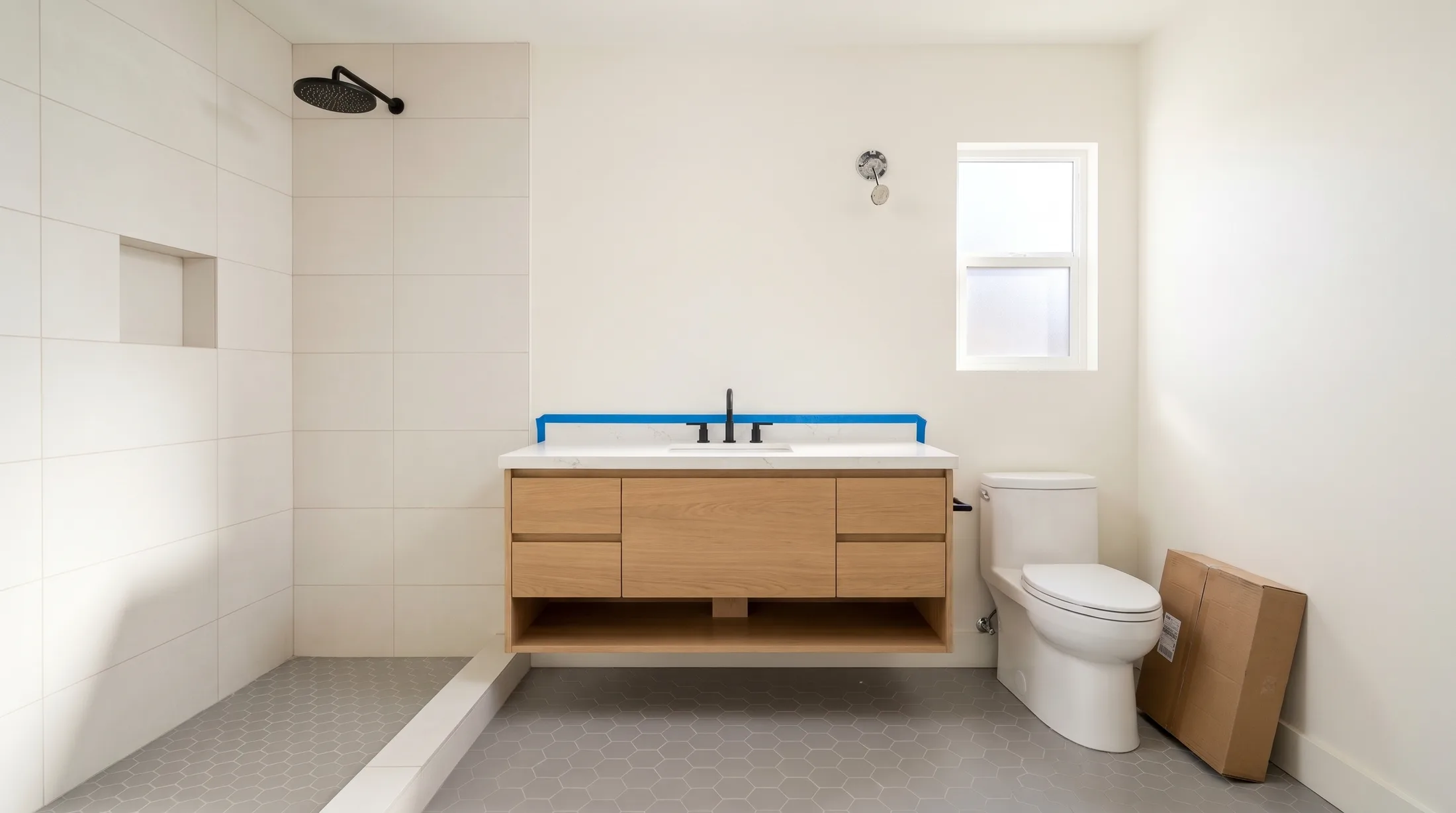
Stage 6 of 7
Paint, vanity and toilet
2 to 3 days
Walls get painted, then the vanity, sink, faucet and toilet go in and get hooked up. The bathroom works again here, even though it is not finished.
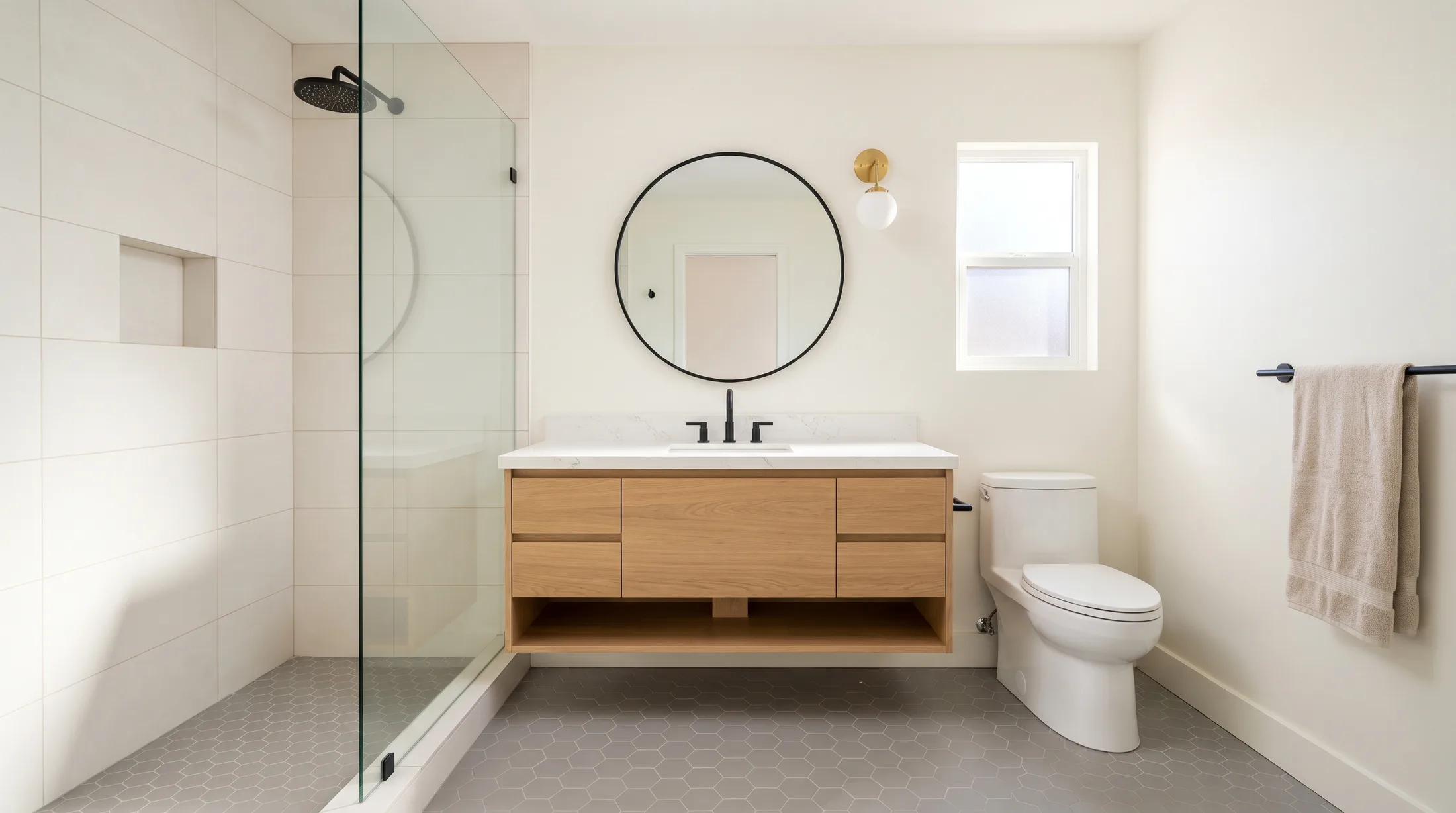
Stage 7 of 7
Glass, mirror and walkthrough
2 to 3 days, once the glass arrives
Custom shower glass is measured after the tile is done and built to order, so it is often the last thing in. Mirror, lights, accessories and a final inspection follow, then a walkthrough and a short punch list.
What decides how long yours takes
- Moving the plumbing. Keeping the shower, toilet and sink where they are is the biggest time saver. Moving a drain means cutting floors and another inspection.
- Made-to-order pieces. Custom vanities and shower glass are built for your room. Glass can only be measured once the tile is in.
- What’s under the old tub. Water damage and rot show up at demolition and get fixed before anything new goes in.
- Tile and size. Small or patterned tile, niches and benches add days. A bigger bathroom is more tile, not more stages.
- Inspections. Rough-in and final inspections run on your city’s calendar. Ask your contractor when they are booked.
If it’s your only bathroom
From demolition until the toilet goes back in, the room is out of use. A few things make that stretch easier:
- Ask whether the toilet can be set back at the end of each day during the early stages
- Line up a shower elsewhere: a gym, a neighbor, family nearby
- Plan the remodel around a trip if the timing works
Knowing where yours is at
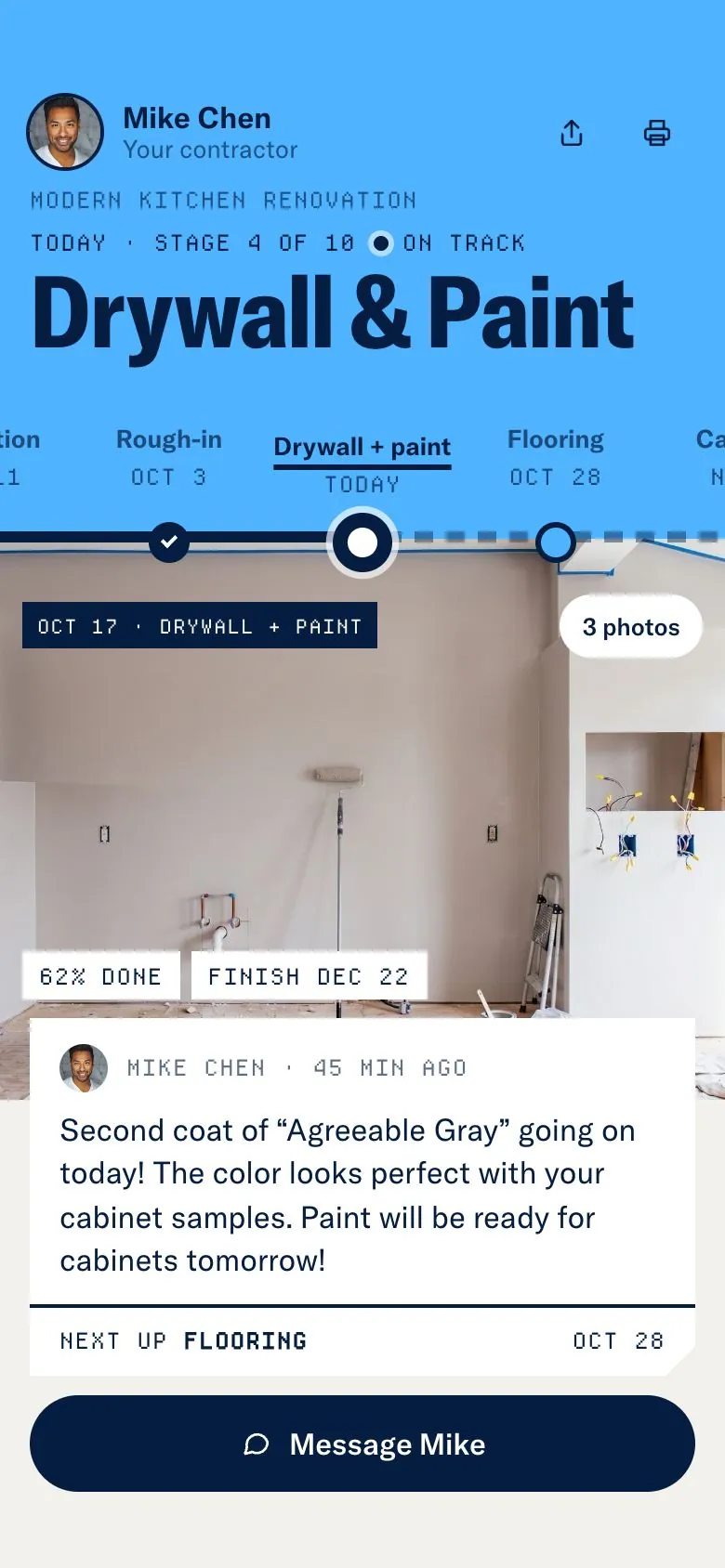
The hardest part of a remodel is usually not the dust. It is not knowing what happened today or what comes next. More contractors now send a live timeline instead: one link that shows the stage you are in, today’s photos and the next step.
This is what one looks like: the Andersons’ kitchen on their phone, mid-job, stage 4 of 10.
If your contractor doesn’t send one, show them this page.
Questions homeowners ask
How long does a small bathroom remodel take?
About the same as a large one if the scope is the same: every trade still comes in order and tile still needs to cure. A small bathroom is less tile, so it saves days, not weeks. Keeping the layout as it is saves the most.
How long does it take to remodel a shower?
Replacing a tiled shower usually takes 1 to 2 weeks of work: demolition, valve and drain, waterproofing, tile, then the glass once it arrives.
How long until I can use the shower after tiling?
Grout and sealant need time to cure first. Your contractor will tell you how long for the products they used; it is usually a few days.
Do I need a permit to remodel a bathroom?
Usually yes if plumbing, wiring or walls change, and usually no for a cosmetic refresh. Your city decides, and a permit typically takes a week or two.
Why does the shower glass come last?
Frameless glass is cut to fit the finished tile, so it can only be measured after the tile is done, then it is made to order.
What is the most common reason a bathroom remodel runs late?
Damage found behind the old tile or under the tub, moved plumbing, and made-to-order pieces like vanities and glass that arrive after the room is ready for them.
Sources: stage durations from Block Renovation, “How Long Does it Take to Remodel a Bathroom?” (June 2026). Primary bathroom average from the 2020 U.S. Houzz & Home study: homeowners spent an average of 5.4 months planning and 3.2 months building a primary bathroom finished in 2019, DIY projects included.